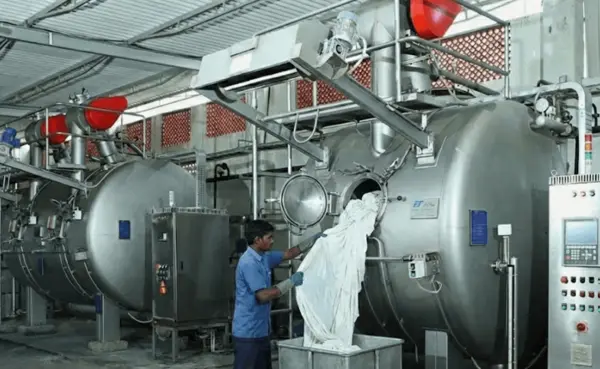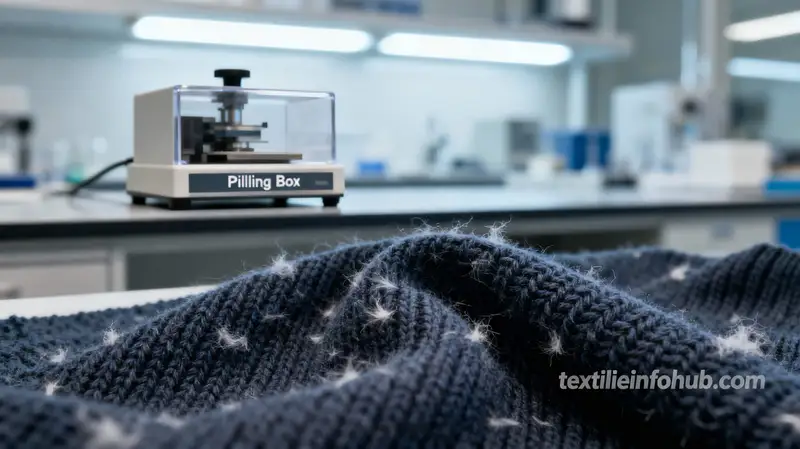

Textile manufacturing is not simply a sequence of machines. It is a controlled chain of material transformations in which every department passes material, information, and risk to the next.
A spinning mill can produce yarn within specification and still create problems in weaving, knitting, or dyeing. A dyehouse can achieve the approved shade and still release fabric with unacceptable dimensional stability. A sewing line can meet its production target while rework, inspection failure, and delayed shipment erase the apparent gain.
The practical question is therefore not only, “What is the next manufacturing stage?” It is:
Has each stage produced material that is fit for the next process—and is there evidence to release it?
This guide follows textile manufacturing from product definition and fiber selection to finished-product dispatch. It explains the major manufacturing routes, the decisions made at each stage, the variables that must be controlled, the defects that can transfer downstream, and the evidence needed before production moves forward.
Scope note: This is a process-control framework, not a universal machine recipe or buyer specification. Actual machine settings, chemical recipes, test methods, acceptance limits, safety requirements, and legal duties must be validated for the fiber, construction, machinery, chemistry, buyer requirement, end use, and destination market.
Contents
- Textile manufacturing process at a glance
- Five questions to ask at every manufacturing handoff
- Start with the product specification—not the machinery
- Choose the correct manufacturing route
- Control fiber and raw-material variation
- Convert fibers or filaments into yarn
- Form fabric without transferring hidden defects
- Prepare the substrate for coloration and finishing
- Add colour by dyeing or printing
- Build appearance and function through finishing
- Protect accumulated value during product conversion
- Release quality with testing and evidence
- Make traceability survive splits, merges, and rework
- Plan capacity, flow, and cost around accepted output
- Control utilities, chemicals, environment, and safety
- Use KPIs that expose loss rather than hide it
- Diagnose defects across departmental boundaries
- Troubleshoot with evidence
- Modernize around decisions—not dashboards
- Adapt the system to the end use
- Factory audit checklist
- Glossary
- Frequently asked questions
Textile manufacturing process at a glance
A common staple-fiber route follows this sequence:
Product specification → fiber selection → opening and blending → carding or combing → drawing → spinning → winding → weaving or knitting → pretreatment → dyeing or printing → finishing → garment or product conversion → inspection → packing and dispatch
That sequence changes for filament products, nonwovens, yarn-dyed fabrics, garment-dyed products, coated materials, composites, and many technical textiles. A reliable manufacturing plan therefore starts with the end use and works backward.
Four principles apply to almost every textile route:
- Start with the product, not the process. Define what the finished textile must do before selecting material, machinery, chemistry, or route.
- Treat every stage as a supplier to the next. The output must include both conforming material and usable process information.
- Control variation as early as possible. Later departments may reveal an upstream difference, but they cannot always remove it.
- Measure accepted output, not activity alone. Speed, kilograms, metres, or pieces are incomplete measures when rework, downgrade, delay, and rejection remain hidden.
Five questions to ask at every manufacturing handoff
Use these questions at every stage of the textile manufacturing process.
1. What enters the process?
Identify the material lot, condition, specification, quantity, quality status, and relevant process history. “Cotton yarn,” “polyester fabric,” or “approved chemical” is not enough when lot, construction, finish, or storage condition can change the result.
2. What must be controlled?
Define the variables that influence quality, productivity, safety, resource use, and downstream performance. Control means more than displaying a setpoint; it includes measurement method, frequency, tolerance, reaction rule, and ownership.
3. What evidence releases the output?
Use inspection, measurements, test results, process records, and authorized decisions. A completed operation is not automatically an accepted operation.
4. What failure can transfer downstream?
Consider differences that may remain hidden until dyeing, finishing, garment washing, final inspection, or product use. The department where a defect becomes visible is not necessarily the department where it began.
5. Who acts when the evidence fails?
Define containment, escalation, disposition, rework authority, and corrective-action responsibility before production continues. Without a reaction plan, a limit is only a number on a document.
These five questions turn a list of manufacturing departments into a controlled production system.
How to use this guide
- To understand the complete route: Read Sections 1–9 in sequence.
- To develop a new product: Start with Sections 1–3, then select the relevant manufacturing route.
- To investigate a defect: Go to Sections 15 and 16, then trace the evidence upstream and downstream.
- To improve factory performance: Focus on Sections 10–14 and the accepted-output measures.
- To audit a supplier or factory: Use Section 19 and ask for evidence behind every claimed control.
1. Start with the product specification—not the machinery
The manufacturing route should be the consequence of a product decision. When a factory begins with available machinery and tries to force the product into that route, quality and cost problems are built into the order before production starts.
Translate end use into critical-to-quality requirements
Start by asking what the product must do in use. An apparel fabric may be judged on appearance, comfort, drape, colour, dimensional stability, seam performance, care, and safety. A filtration textile may be governed by pore structure, pressure drop, capture performance, chemical resistance, and service conditions. Upholstery, protective clothing, medical products, geotextiles, and coated fabrics each require a different set of critical-to-quality characteristics.
A useful product definition normally covers:
- fiber content and permitted variation;
- yarn or filament characteristics;
- fabric construction and mass per unit area;
- width, length, thickness, or other dimensional requirements;
- colour, pattern, surface, handle, and appearance;
- strength, stretch, recovery, abrasion, pilling, or tear performance where relevant;
- dimensional stability and care conditions;
- functional performance such as repellency, flame behaviour, filtration, conductivity, barrier performance, or durability where relevant;
- restricted-substance, chemical-management, labelling, safety, and market-access requirements;
- inspection, sampling, test methods, conditioning, acceptance rules, and approved laboratories;
- packaging, identification, traceability, storage, and dispatch requirements.
Do not treat a test-method identifier as a complete specification. A usable requirement also states the applicable product, specimen preparation, conditioning, cycles or exposure, reporting rule, acceptance limit, and decision authority.
Confirm feasibility before calculating the selling price
Costing a route that cannot reliably meet the product requirement creates false precision. Before commercial approval, confirm:
- the material is compatible with the required performance;
- the factory has a capable manufacturing route;
- critical equipment and laboratory capacity are available;
- the expected yield, rework risk, and lead time are understood;
- required chemicals, trims, services, and external processes can be sourced;
- testing and release requirements are achievable;
- safety, environmental, legal, buyer, and destination-market obligations have been reviewed by the responsible specialists.
Only then should the factory freeze the route, preliminary bill of material, consumption assumptions, capacity requirement, and commercial cost.
2. Choose the correct manufacturing route
There is no universal textile manufacturing sequence. The correct route depends on fiber form, product structure, colour stage, finish, conversion method, lot size, design complexity, performance requirement, available equipment, and accepted-output economics.
Staple-fiber woven route
Typical flow: Bale or staple fiber → opening and blending → carding, optional combing, drawing, roving where required, spinning and winding → warping → sizing where required → weaving → greige inspection → pretreatment → dyeing or printing → finishing → inspection → conversion and dispatch.
Critical distinction: Warp preparation and weaving introduce tension, sizing, stop-mark, selvedge, bow, skew, and construction risks that differ from knitting.
Staple-fiber knitted route
Typical flow: Staple fiber → yarn manufacture → knitting → greige relaxation and inspection → pretreatment → dyeing or printing → finishing and compacting or other dimensional-control route → garment or product conversion.
Critical distinction: Loop length, yarn lot, feeder condition, machine setting, relaxation, residual torque, spirality, width, mass per unit area, and dimensional stability are closely connected.
Filament route
Typical flow: Polymer or solution preparation → filament formation → drawing, orientation, heat treatment, texturing or twisting as required → weaving, knitting, or direct web formation → wet processing or surface treatment → finishing and conversion.
Critical distinction: Polymer identity, filament linear density, cross-section, orientation, texturing, spin finish, and thermal history can affect fabric formation, coloration, handle, shrinkage, and end-use performance.
Nonwoven route
Typical flow: Staple fibers or directly formed filaments → web formation → mechanical, thermal, or chemical bonding → finishing or functional treatment → slitting, converting, and packing.
The industry association EDANA describes nonwoven production through web formation, web bonding, finishing, and conversion. Unlike a conventional woven or knitted route, many nonwovens bypass yarn manufacture completely.
Critical distinction: Web uniformity, basis weight, fiber orientation, bonding conditions, pore structure, and conversion quality may be more important than yarn properties.
Yarn-dyed route
Typical flow: Fiber and yarn manufacture → package, hank, beam, or other yarn coloration route → drying and preparation → weaving or knitting → finishing → inspection and conversion.
Critical distinction: Shade consistency must survive package position, yarn preparation, drying, winding, warping, weaving or knitting, and finishing. Yarn sequence and lot identity become design controls.
Garment-dyed or product-dyed route
Typical flow: Suitable undyed or prepared fabric → cutting and sewing or product formation → garment or product dyeing → washing and finishing → measurement, appearance, performance, and final inspection.
Critical distinction: Sewing thread, trims, interlinings, elastics, labels, components, seam construction, shrinkage, abrasion, and migration must be compatible with the coloration route.
Printed, coated, or laminated route
Printing, coating, and lamination may sit on top of woven, knitted, nonwoven, film, foam, membrane, or composite structures. Substrate surface condition, adhesion, dimensional stability, curing or fixation, layer compatibility, and end-use testing become major controls.
The route-selection decision
Choose the route using the following order:
- end use and critical performance;
- material and structure;
- colour and design stage;
- required finish or functional layer;
- test and compliance obligations;
- lot size, style mix, changeover, and lead time;
- available process capability;
- expected yield, rework risk, utilities, and accepted-output cost.
The cheapest nominal route is not the cheapest route when it produces more seconds, reprocessing, claims, or late delivery.
3. Control fiber and raw-material variation
The finished textile inherits both the strengths and the variation of its starting material. No later process can fully compensate for an unsuitable or uncontrolled raw material.
Cotton and other natural fibers
For cotton, the relevant incoming characteristics can include length, length uniformity, strength, micronaire, colour, trash, moisture, contamination, and preparation. The exact combination depends on yarn count, spinning system, fabric appearance, coloration route, and end use.
The USDA Agricultural Marketing Service cotton-classing system illustrates how instrument measurements and visual classification can support bale-specific sourcing and manufacturing decisions. A mill should still define its own purchase specification, bale-management method, sampling plan, and reaction rules for its products.
Other natural fibers bring different controls: fineness distribution, length, maturity, retting or decortication history, vegetable matter, scouring state, moisture, damage, colour, and contamination may be relevant. The purchase name alone does not define processability.
Manufactured fibers and filaments
For regenerated and synthetic materials, verify the characteristics that affect the chosen route, such as:
- polymer or fiber identity;
- linear density or denier;
- filament count and cross-section;
- staple cut length and crimp;
- tenacity and elongation;
- luster, pigment, optical brightener, or delustrant where relevant;
- spin finish or lubricant;
- moisture state;
- thermal and drawing history;
- lot identity and supplier change.
A substitute with the same generic fiber name may behave differently during drafting, texturing, knitting, heat setting, dyeing, or finishing.
Recycled and blended inputs
Recycled materials can introduce wider variability in composition, colour, contamination, thermal history, fiber length, strength, and traceability. Blends add another control problem: the proportion and distribution of components must support spinning, structure formation, coloration, finishing, care, and product claims.
Do not manage a blend only as a percentage on a purchase document. Verify identity, lot, test evidence, process compatibility, and the effect of variation on the finished product.
Incoming-material release gate
An effective incoming gate answers five questions:
- Is the received material the material ordered?
- Is the lot identifiable and traceable?
- Are the certificate and supplier records complete and applicable?
- Do the factory’s risk-based checks agree with the required specification?
- Is the material released, held, conditionally accepted, or rejected by an authorized person?
A certificate of analysis can support release, but it does not replace identity control, sampling judgment, supplier performance history, or verification of critical properties.
4. Convert fibers or filaments into yarn
Yarn manufacture turns discontinuous fibers or continuous filaments into a structure that can survive subsequent processing and deliver the required fabric performance.
Staple-yarn manufacturing sequence
A common cotton or staple-fiber sequence includes:
- Opening and cleaning: Separate, open, blend, and remove appropriate impurities while avoiding unnecessary fiber damage.
- Carding: Further individualize fibers, remove selected impurities and neps, and form a sliver.
- Combing where required: Remove a controlled portion of short fibers and improve alignment for products that justify the added processing and material loss.
- Drawing: Double and draft slivers to improve mass regularity, blending, and fiber orientation.
- Roving where required: Reduce linear density and add enough cohesion for the selected spinning system.
- Spinning: Create the final yarn structure by the selected method.
- Winding and clearing: Build usable packages, remove selected faults according to a defined clearing policy, join yarn, and prepare for the next operation.
The exact sequence changes with fiber, spinning technology, count, product, and mill configuration. A seperate dedicated guide on Cotton spinning process is also available.
Ring spinning
Best suited to: Products requiring the structure and property combination delivered by ring-spun yarn, subject to the selected fiber and count.
Control focus: Drafting stability, twist, spindle and traveler condition, end breaks, hairiness, mass variation, strength, package quality, and contamination.
Trade-off: Product capability must be balanced against production rate, energy, labor, and downstream behavior.
Rotor spinning
Best suited to: Product ranges where rotor-yarn structure, productivity, fiber preparation, and count range meet the finished requirement.
Control focus: Opening cleanliness, rotor condition, feed consistency, piecing, yarn structure, strength, evenness, and package quality.
Trade-off: A higher nominal production rate does not justify a yarn structure that is unsuitable for the fabric or end use.
Air-jet and other spinning systems
Best suited to: Products whose required yarn structure, handle, appearance, pilling behavior, productivity, and downstream performance align with the technology.
Control focus: Fiber suitability, drafting, nozzle and air system condition, yarn structure, fault control, and lot consistency.
Trade-off: Technology names are not quality grades. Compare the finished-product result, process stability, waste, energy, and accepted output.
Filament preparation and texturing
Continuous-filament routes may include drawing, heat treatment, texturing, twisting, intermingling, sizing, or other preparation. Control filament identity, package build, tension, broken filaments, finish, crimp or bulk, dye affinity, and thermal history.
Yarn controls that matter downstream
The yarn specification should include the characteristics that matter to the next process and the product, which may include:
- linear density and tolerance;
- mass variation and fault distribution;
- strength and elongation;
- twist and twist direction;
- hairiness or surface character;
- contamination and foreign fiber;
- package density, shape, length, and unwinding behavior;
- moisture or conditioning state;
- lot identity, merge rules, and test status.
An average result can hide harmful distribution. A small number of severe faults or an uncontrolled lot mixture may create weaving stops, knitting defects, barre, shade variation, or appearance failure even when the mean value appears acceptable.
Measure yarn realization with a declared boundary
One useful material measure is:
Yarn realization (%) = accepted yarn output ÷ raw-material input × 100
The definition must state the input boundary, accepted output, recoverable waste, saleable by-products, moisture basis, period, and treatment of work in process. Otherwise, two departments may report different realization from the same material flow.
5. Form fabric without transferring hidden defects
Fabric formation converts yarn, filament, or fiber web into a two- or three-dimensional structure. Structure determines not only appearance but also strength, stretch, drape, permeability, dimensional behavior, processing stability, and end-use performance.
Woven fabric
Woven manufacture commonly includes warping, sizing where required, drawing-in or tying-in, weaving, roll formation, and greige inspection.
Key controls:
- warp and weft identity;
- yarn-lot and beam control;
- warp tension and uniformity;
- sizing formulation, add-on, penetration, drying, and desizability where sizing is used;
- machine condition and settings appropriate to construction;
- pick density, warp density, width, selvedge, bow, skew, and fabric appearance;
- stop marks, missing or double picks, broken ends, floats, reed marks, oil, contamination, and damage;
- roll identity, length, defect map, and grade.
When selecting loom technology, evaluate the product mix, yarn behavior, design, width, compressed-air or mechanical infrastructure, maintenance capability, changeover, energy, and accepted metres—not speed alone. TextileInfoHub’s air-jet versus rapier loom guide can support a deeper machinery comparison, but every investment still requires a product-specific trial and vendor evidence.
Knitted fabric
Knitting forms fabric by interlooping yarn. Circular, flat, warp, and specialized knitting systems create different structures and control needs.
Key controls:
- yarn identity, package, lubrication, and lot rules;
- machine gauge, needle and sinker condition, feeder condition, and program;
- yarn input tension and loop length;
- course or wale density where applicable;
- greige mass per unit area, width, roll length, and relaxation state;
- holes, dropped stitches, needle lines, barré, spirality, contamination, oil, and elastane-related defects;
- machine, feeder, shift, yarn-lot, and roll traceability.
The greige value does not always equal the finished value. Relaxation, wet processing, heat, mechanical finishing, and garment washing can change width, mass per unit area, skew, spirality, stretch, and shrinkage. Product development must validate the complete route.
Nonwoven fabric
Nonwoven manufacture combines web formation with bonding and finishing. Depending on the technology, the web may be drylaid, airlaid, wetlaid, spunlaid, meltblown, or formed by another route; bonding may be mechanical, thermal, chemical, or combined.
Key controls:
- fiber or polymer identity;
- web basis weight and uniformity;
- fiber orientation and formation quality;
- bonding energy, pressure, density, or chemical add-on as applicable;
- thickness, strength, elongation, pore or barrier characteristics, absorbency, and surface condition;
- roll formation, slitting, contamination, and conversion quality.
Because nonwovens serve applications ranging from wipes to filtration, medical, construction, automotive, and geotextiles, the end-use test—not the word “nonwoven”—defines acceptable performance.
The greige-fabric release gate
Do not send fabric to value-adding wet processing simply because the loom or knitting machine produced a roll. A risk-based greige release should confirm:
- correct construction and material identity;
- required width, length, mass, density, or other structural values;
- acceptable defect level and mapped defect positions;
- lot integrity and traceability;
- suitability for batching and the next process;
- disposition of off-quality material before further cost is added.
6. Prepare the substrate for coloration and finishing
Pretreatment removes or modifies the impurities, sizes, oils, finishes, surface conditions, or structural instability that would prevent consistent coloration and finishing. It is not one universal recipe.
Build the pretreatment route from the substrate
A route may include some combination of:
- inspection, stitching, batching, opening, or relaxation;
- singeing for selected fabrics;
- desizing where removable size is present;
- scouring or washing to remove natural or added impurities;
- bleaching where the required whiteness or colour demands it;
- mercerization for selected cellulosic products;
- heat setting for suitable thermoplastic structures;
- milling, carbonizing, degumming, or other fiber-specific preparation;
- neutralization, washing, drying, or intermediate storage.
A woven cotton fabric with size, a cotton knit, a polyester filament fabric, a polyester-cotton blend, wool, polyamide, and a nonwoven should not inherit the same default route.
The purpose of each step must be explicit
Before retaining an operation, ask:
- What material or variation is the step intended to remove, modify, or stabilize?
- What measurement shows that the purpose has been achieved?
- What damage or variation can excessive or inadequate treatment create?
- What downstream process depends on the result?
- Can the step be combined, shortened, or removed without losing control?
This prevents historical recipes from becoming permanent even after the substrate, equipment, chemistry, or product changes.
Pretreatment controls
Depending on the route, control:
- material identity and batch formation;
- chemical identity, concentration, compatibility, and dosing;
- water quality;
- liquor ratio or application amount;
- pH, oxidation-reduction conditions, temperature, time, and mechanical action where relevant;
- washing effectiveness and carryover;
- fabric tension, speed, width, creasing, and surface condition;
- drying or heat history;
- chemical, water, energy, and wastewater consequences.
Release evidence before coloration
The required evidence depends on the product, but may include:
- identity and route record;
- removal of relevant size, oil, wax, or contaminant;
- absorbency or wetting behavior;
- whiteness or base colour where applicable;
- residual pH or chemical condition;
- width, mass, dimensional state, and surface appearance;
- strength or damage check where processing risk justifies it;
- defect map and batch status.
Poor pretreatment is often blamed only when dyeing becomes uneven. By then, the batch has already consumed more chemicals, capacity, water, energy, and time. Release preparation with evidence before adding colour.
7. Add colour by dyeing or printing
Colour can be introduced in the polymer or spinning dope, loose fiber, top or tow, yarn, fabric, garment, or selected printed areas. The colour stage affects design freedom, lot size, inventory risk, penetration, lead time, fastness potential, defect modes, and demand responsiveness.
Match colourant and process to fiber chemistry
The following are orientation points, not recipe instructions.
Cellulosic fibers such as cotton and viscose
Common options: Reactive, vat, direct, sulfur, pigment, and other application-specific systems.
Main questions: Is pretreatment adequate? Does the selected system meet shade, fastness, handle, cost, wastewater, and end-use requirements? Are fixation and removal of unfixed colour controlled?
Polyester
Common options: Disperse coloration and selected pigment or surface systems.
Main questions: Are thermal history, dispersion, circulation, fixation, oligomer risk, reduction clearing where required, sublimation, and heat-setting interactions controlled?
Polyamide
Common options: Acid, metal-complex, disperse, or selected reactive systems depending on material and end use.
Main questions: Are fiber type, affinity, pH profile, leveling, heat history, end-use fastness, and differential uptake controlled?
Wool and other protein fibers
Common options: Acid, metal-complex, reactive, and selected natural-dye routes.
Main questions: Are pH, temperature progression, fiber damage, felting, leveling, and aftertreatment appropriate to the product?
Acrylic
Common options: Basic or cationic systems and selected surface routes.
Main questions: Are saturation behavior, compatibility, temperature profile, leveling, and lot differences understood?
Blends
Common options: Combination, union-dye, cross-dye, one-bath, or multi-stage routes.
Main questions: How will each component respond? Are cross-staining, differential shrinkage, shade balance, component damage, and combined fastness acceptable?
Always confirm current supplier technical information, chemical-management requirements, buyer restrictions, applicable law, and the mill’s validated process before production.
Batch, semi-continuous, and continuous dyeing
Batch processing
Best for: Flexible lot sizes, varied shades, and products suited to the selected machine.
Control focus: Loading, liquor movement, dosing, pH and chemical profile, temperature-time history, fabric movement, stoppages, washing, and batch reproducibility.
Semi-continuous processing
Best for: Products where application and delayed fixation can provide the required flexibility and performance.
Control focus: Fabric preparation, pad expression, widthwise uniformity, batching, dwell conditions, temperature, washing, and start-to-end consistency.
Continuous processing
Best for: Suitable constructions, longer campaigns, and routes where stable application, fixation, and washing can deliver efficient accepted output.
Control focus: Line speed, wet pick-up, chemical concentration, widthwise profile, moisture, dwell, heat transfer, washing, start-stop behavior, changeover, and range stability.
Choose among these routes using substrate, lot size, style mix, shade, required penetration, fastness, equipment, campaign length, changeover loss, utilities, and saleable output—not liquor ratio or nominal speed alone.
For a deeper comparison of cotton routes, see Reactive Dyeing Methods for Cotton: Exhaust, CPB and Continuous.
The lab-to-bulk control loop
A laboratory formula is a starting point, not a production guarantee. Bulk reproducibility depends on alignment across:
- substrate identity and preparation;
- dye and auxiliary identity and lot;
- water quality;
- weighing, dispensing, dissolving, and solution preparation;
- liquor ratio or wet pick-up;
- pH and chemical-addition profile;
- temperature-time history;
- liquor or fabric circulation;
- fixation and wash-off;
- drying and finishing before assessment;
- conditioning, instrument settings, illuminants, standards, tolerances, and decision rules.
A numerical colour difference is not a universal pass-or-fail limit. The allowed tolerance belongs to the approved specification, measurement conditions, visual assessment agreement, end use, and buyer decision process.
Define right-first-time colour before reporting it
One useful definition is:
Right-first-time colour (%) = batches released without unplanned colour correction or reprocessing ÷ completed batches × 100
State whether planned additions count as correction, whether finishing-induced shade change is included, and which release gate closes the batch. Pair the percentage with reason codes so the factory can distinguish substrate, laboratory prediction, weighing, dosing, water, machine, procedure, operator, chemical-lot, and finishing causes.
Contain colour problems before searching for causes
When shade or appearance fails:
- stop mixing suspect material with accepted lots;
- identify affected batches, rolls, packages, or garments;
- preserve standards, samples, recipes, actual process records, water data, chemical lots, machine events, and operator observations;
- prevent further value addition until disposition is authorized.
Containment protects the customer and preserves evidence. Root-cause analysis follows.
Textile printing is a complete process system
Printing places colour or functional material in selected areas. Routes include screen, rotary-screen, roller in specialized uses, transfer or sublimation for compatible products, and digital inkjet.
A printing system includes:
- design, repeat, colour separation, profiling, and file control;
- screen, roller, blanket, printhead, or transfer-medium condition;
- substrate pretreatment and surface state;
- paste or ink identity, preparation, rheology, filtration, and storage;
- registration, drop placement, penetration, edge definition, and strike-through;
- drying, fixation, curing, transfer, washing, or aftertreatment as required;
- inspection for colour, hand, fastness, defects, and repeat accuracy.
Digital printing removes screens but not process control. Substrate variation, pretreatment, printhead condition, environment, colour management, transport, fixation, and wash-off still determine accepted output.
8. Build appearance and function through finishing
Finishing adjusts the textile’s appearance, handle, dimensions, surface, and performance. It can also create the final failure if the route changes shade, width, strength, stretch, adhesion, permeability, or care behavior.
Mechanical finishing
Examples include drying, heat setting, calendaring, compacting, sanforizing or compressive shrinkage, raising, sueding, shearing, brushing, decatizing, pressing, and other structure-specific operations.
Control focus: Input moisture and condition, tension, pressure, temperature, speed, overfeed, width, dwell, surface action, cooling, and roll formation.
Chemical finishing
Examples include softening, easy-care, repellency, antistatic, antimicrobial, flame-related, soil-release, moisture-management, coating, and other functional systems.
Control focus: Substrate preparation, chemical identity and compatibility, bath stability, concentration, wet pick-up or add-on, distribution, drying, curing, wash durability, handle, shade change, strength, emissions, worker exposure, and claim substantiation.
Do not market a functional claim because a chemical was applied. Release the claim only when the finished product meets the applicable test, durability, safety, legal, buyer, and end-use requirements.
Wet pick-up needs a declared measurement
For pad-applied processes, a common calculation is:
Wet pick-up (%) = (wet fabric mass − dry fabric mass) ÷ dry fabric mass × 100
State how and where samples are taken, the dry-mass basis, the timing of weighing, and whether the result represents the full width. An average can hide center-to-selvedge variation.
Coating and lamination
Coated and laminated products add an interface between layers. Control:
- substrate cleanliness, moisture, and surface energy;
- coating or adhesive identity, mix, age, and application;
- coat weight or film thickness and widthwise uniformity;
- drying, curing, crosslinking, or bonding conditions;
- tension, shrinkage, curl, and dimensional mismatch;
- adhesion, delamination, blocking, pinholes, migration, and aging;
- permeability, barrier, flame, chemical, or other required performance;
- compatibility with later cutting, sewing, welding, care, and use.
Finished-fabric release gate
Release should confirm the applicable combination of:
- identity, lot, route, and approved standard;
- shade and appearance;
- width, mass, length, and dimensional state;
- physical and functional performance;
- finish add-on or process evidence;
- defect level and grade;
- restricted-substance, compliance, and claim evidence;
- packing, storage, and conversion suitability.
9. Protect accumulated value during product conversion
By the conversion stage, the material may already carry most of the order’s value. Cutting, sewing, welding, quilting, molding, slitting, or assembly must protect that value while creating the final product.
Begin with a controlled technical package
The approved package should define the product, materials, components, dimensions, construction, workmanship, tolerances, care, testing, packing, labels, revisions, and approval status. Different teams should not work from different versions.
Fabric receiving and relaxation
Verify roll identity, quantity, width, shade group, defects, direction, nap, bow, skew, and quality status. Relax material when the product and process require it, and record the conditions rather than relying on an informal waiting period.
Spreading and cutting
Control ply alignment, tension, direction, shade grouping, splice rules, marker identity, cutting accuracy, notches, drill marks, bundle identity, and leftover material.
One useful efficiency measure is:
Marker efficiency (%) = pattern-piece area ÷ marker area × 100
The highest marker efficiency is not automatically the best result if it creates fabric mismatch, cutting difficulty, quality risk, or excessive planning time.
Sewing and assembly
Control machine and attachment suitability, needle and thread selection, stitch and seam construction, operator method, feeding, tension, seam allowance, component identity, in-line quality, and defect reaction.
Standard allowed minute or another work-measurement method can support capacity and costing, but the method, performance basis, allowances, operation definition, and revision control must be explicit. Do not treat a historical minute value as permanent after design, method, machine, or quality requirements change.
Garment washing and finishing
Garment wet processing can change shade, contrast, dimensions, seam appearance, strength, trims, labels, handle, and surface. Validate the complete garment and all components under the intended route. Control batch identity, loading, chemistry, mechanical action, temperature, time, drying, and finishing according to the approved process.
Final operations and packing
Pressing, trimming, measurement, visual inspection, metal detection where required, label verification, folding, assortment, packing, carton control, warehousing, and dispatch all require defined evidence.
Packing is not an administrative afterthought. Wrong assortment, label, barcode, moisture condition, carton, or shipment identity can reject an otherwise conforming product.
Non-apparel conversion
Home textiles, filtration products, hygiene articles, composites, automotive components, medical products, geotextiles, and industrial materials may use slitting, quilting, welding, molding, pleating, impregnation, sterilization, assembly, or specialized packing. Apply the same handoff questions: input, control, release evidence, downstream risk, and action owner.
10. Release quality with testing and evidence
Quality assurance designs the system that prevents failure. Quality control measures and decides on material within that system. Inspection and testing are necessary, but they cannot replace capable processes and clear specifications.
Build a control plan from product risk
For each critical characteristic, define:
- what is controlled;
- why it matters;
- process or product stage;
- method and equipment;
- sample location and frequency;
- conditioning and specimen preparation;
- specification or control limit;
- record and traceability requirement;
- reaction plan and decision authority.
Distinguish a process-control limit from a product-acceptance limit. A process may need a tighter internal warning or action limit to prevent the final product from reaching its rejection boundary.
Use quality gates, not end inspection alone
Typical gates include:
- incoming fiber, yarn, fabric, chemicals, trims, and packaging;
- yarn or filament release;
- greige-fabric release;
- pretreatment release;
- coloration approval;
- finished-fabric release;
- cutting or component release;
- in-line and end-line product control;
- final inspection, testing, packing, and shipment release.
Each gate should state who can release, hold, rework, downgrade, concede, or reject material.
Select the correct textile test method
Different methods with similar names may use different apparatus, specimens, conditioning, cycles, assessment scales, or endpoints. Use the method and edition required by the applicable specification, buyer, law, or destination market.
Examples of official ISO catalogue references include:
- ISO 139:2005, with its amendment, for standard atmospheres for conditioning and testing;
- ISO 6330:2021 for domestic washing and drying procedures used in textile testing;
- ISO 5077:2007 for determining dimensional change after specified washing and drying;
- ISO 12945-2:2020 for pilling, fuzzing, and matting using the modified Martindale method;
- ISO 12947-2:2016 for abrasion specimen breakdown by the Martindale method;
- ISO 3758:2023 for care-labelling symbols.
Consult licensed standards and the applicable buyer specification for mandatory apparatus, preparation, procedure, calculation, reporting, and acceptance conditions. Do not reproduce or infer requirements from an old summary.
For a detailed abrasion-testing explanation, see TextileInfoHub’s Martindale abrasion test guide.
Sampling is part of the result
A precise instrument cannot correct a biased sample. Define the lot, sampling unit, specimen location, number of specimens, exclusion rules, and treatment of widthwise or lengthwise variation. Preserve failed and reference specimens when investigation risk justifies it.
Measurement systems also need control
Manage calibration, verification, maintenance, reference materials, environment, operator competence, software, rounding, data transfer, and out-of-tolerance equipment. When two laboratories disagree, compare the complete measurement system—not only the final number.
Colour approval requires aligned conditions
Align physical standards, digital standards where used, specimen conditioning, backing, folding, instrument geometry, aperture, illuminants, observer, inclusion or exclusion of surface effects, visual-assessment conditions, tolerance, and decision authority.
Instrumental colour difference supports a decision; it does not replace the agreed visual and product-specific acceptance process.
11. Make traceability survive splits, merges, and rework
Textile material rarely moves as one untouched lot. Bales are blended, slivers doubled, yarn packages merged, beams created, fabric rolls split, dye batches combined, garments bundled, orders reworked, and shipments assorted. Traceability must survive those transformations.
The GS1 Global Traceability Standard provides a sector-neutral framework based on identifying, capturing, and sharing information about traceable objects and events. A textile factory must still define the objects, events, and depth appropriate to its risk and customer requirements.
Minimum traceability questions
For a finished lot, roll, package, garment, carton, or shipment, can the factory retrieve:
- customer order and product specification revision;
- material and component lots;
- supplier and receiving status;
- machines, batches, work centers, and relevant process times;
- recipe, route, program, or bill-of-material version;
- actual process record and material consumption;
- inspection, test, hold, concession, rework, and release history;
- operators or responsible roles where required;
- splits, merges, regrades, returns, and substitutions;
- finished-stock, packing, and shipment identity?
Control change as carefully as production
An approved change should state:
- what is changing and why;
- affected products, materials, equipment, recipes, methods, and documents;
- risk assessment and required trials;
- approvals and effective date;
- treatment of work in process and old stock;
- training and communication;
- validation evidence;
- post-change monitoring and rollback plan.
A new chemical, supplier, yarn lot, software rule, machine part, speed, temperature profile, or test method can change the finished product. “Equivalent” must be demonstrated at the level that matters.
12. Plan capacity, flow, and cost around accepted output
Production planning connects customer demand with material, capacity, sequence, quality gates, utilities, subcontracting, and dispatch. A schedule that ignores route constraints creates work in process, queues, expediting, and late orders.
Plan the complete route
The planning record should include:
- product and specification revision;
- approved route and alternate route rules;
- material availability and lot restrictions;
- machine or work-center capability;
- batch, beam, roll, package, or bundle formation;
- setup, cleaning, colour sequence, and changeover;
- processing, waiting, testing, approval, and transport time;
- expected loss, yield, rework, and quality holds;
- external processing and return risk;
- packing and shipment deadline.
Protect the bottleneck
The constraint may be a machine, laboratory, approval, utility, operator skill, maintenance window, shade sequence, or external processor. Increasing output upstream of the constraint can increase inventory without increasing shipment.
Monitor the constraint’s accepted output, queue, planned versus actual time, loss reason, and recovery plan. Do not reward departments for producing material that the bottleneck cannot process.
Control work in process
For every WIP location, know:
- order, product, lot, and quantity;
- current process and quality status;
- age and waiting reason;
- next operation and required release;
- physical location;
- risk of shade, contamination, moisture, mix-up, damage, or obsolescence.
WIP is not only tied-up money. It can hide quality problems, lengthen feedback, consume space, complicate traceability, and make priorities unstable.
Cost the accepted product
Record both standard and actual consumption for fiber, yarn, fabric, dyes, chemicals, water, energy, labor, machine time, external processing, packaging, rework, waste, and downgrade where material.
A useful operational measure is:
Conversion cost per accepted unit = total relevant conversion cost ÷ accepted output
The accepted unit may be a kilogram, metre, piece, roll, or shipment. State whether downgraded material, by-products, overhead, depreciation, finance, and abnormal losses are included.
A faster process can have a higher accepted-output cost when it creates more defects, changeover, utility consumption, maintenance, or reprocessing.
For mills evaluating information systems, Choosing Textile ERP Software: A Practical Mill Buyer’s Guide provides a workflow-based selection method.
13. Control utilities, chemicals, environment, and safety
Water, steam, electricity, compressed air, thermal oil, cooling, ventilation, vacuum, and wastewater treatment are part of the manufacturing process. If utility conditions vary, product conditions can vary.
Build mass and resource balances
Measure resource use at a level that supports action:
- per kilogram, metre, piece, batch, or accepted unit;
- by process, machine, or line;
- by product family or route;
- during production, start-up, shutdown, cleaning, and idle time;
- including rework and rejected output.
An improvement is credible only if the product remains conforming and the measurement boundary is clear.
Water and energy improvement sequence
Use this order:
- define the process and measurement boundary;
- repair leaks, traps, insulation, compressed-air loss, and obvious waste;
- stabilize quality and reduce reprocessing;
- optimize loading, sequence, washing, drying, heat transfer, and idle operation;
- recover suitable heat or water;
- evaluate process or equipment change;
- validate product quality, safety, maintenance, and wastewater consequences after change.
The European Commission’s Textiles Industry BREF covers pretreatment, dyeing, printing, finishing, and related environmental considerations. It is a technical reference, not a substitute for site-specific legal review.
Chemical management
Control chemicals from approval through disposal:
- identity, supplier, lot, and intended use;
- current safety data and technical information;
- inventory, expiry, storage compatibility, and segregation;
- labeling and transfer containers;
- weighing, dispensing, dosing, and spill control;
- worker training, exposure control, and personal protective equipment determined by risk assessment;
- formulation approval and restricted-substance requirements;
- wastewater, sludge, emissions, and disposal implications;
- change control and emergency response.
The ZDHC Manufacturing Restricted Substances List addresses substances restricted from intentional use in chemical formulations for textile and related manufacturing. ZDHC explicitly states that its MRSL does not replace legal, environmental, workplace-safety, or brand-specific requirements. Verify the currently applicable version and customer program before use.
Wastewater and sludge
Control influent variation, segregation, equalization, treatment capacity, chemical dosing, biological condition where used, solids, sludge, monitoring, laboratory quality, and discharge or reuse decisions. Production changes can shift pH, salt, colour, chemical oxygen demand, temperature, and treatability.
The ZDHC Wastewater Guidelines provide an industry framework for specified wastewater and sludge parameters, methods, and expectations. Applicable law and permits remain controlling.
Occupational health and safety
Textile hazards can include moving machinery, entanglement, cuts, needles, pressure, heat, steam, chemicals, dust, noise, manual handling, fire, confined spaces, electricity, traffic, and ergonomic strain. The actual risk depends on the process and site.
The ILO code of practice for safety and health in textiles, clothing, leather, and footwear offers sector-specific guidance. The IFC Environmental, Health, and Safety Guidelines for Textile Manufacturing provide additional reference material. These documents do not replace applicable law, professional risk assessment, or qualified site-specific engineering.
Management-system references may include ISO 14001:2026 for environmental management and the current published ISO 45001 requirements for occupational health and safety management. Verify transition requirements and current editions with the responsible certification, legal, and safety professionals.
Carbon accounting
Energy reduction and greenhouse-gas accounting are related but not identical. Define organizational and operational boundaries, data sources, emission factors, base periods, and treatment of purchased energy and value-chain emissions. The GHG Protocol standards and guidance provide recognized accounting frameworks.
Do not describe a process change as carbon reduction without a defined baseline, comparable boundary, and supported calculation.
14. Use KPIs that expose loss rather than hide it
Manufacturing KPIs should connect action with customer, quality, flow, cost, maintenance, and resource performance. NIST research on manufacturing KPI relationships emphasizes that indicators are interdependent rather than isolated.
Material yield
Yield (%) = accepted output ÷ input × 100
Define the input, output, moisture basis, by-products, downgraded material, work in process, and period.
First-pass yield
First-pass yield (%) = output accepted without rework ÷ total output presented × 100
State whether repair, colour addition, reinspection, or conditional release counts as first pass.
Right first time
RFT (%) = lots completed and released without unplanned correction or reprocessing ÷ completed lots × 100
Use reason codes. A percentage without cause information cannot direct improvement.
Overall equipment effectiveness
OEE = availability × performance × quality
Define planned production time, ideal rate, good output, changeovers, small stops, startup loss, and quality loss. OEE can support improvement, but it should not encourage unsafe speed or overproduction.
On-time in-full delivery
OTIF (%) = orders delivered by the agreed date and in the agreed quantity ÷ due orders × 100
Define customer date, delivery point, quantity tolerance, partial shipment, reschedule rules, and treatment of customer-caused changes.
Cost of poor quality
Track prevention, appraisal, internal failure, and external failure costs where the accounting system supports them. At minimum, make visible:
- scrap and downgrade;
- rework and reinspection;
- extra chemicals, water, energy, labor, and machine time;
- sorting, air freight, return, replacement, and claim;
- lost capacity and delayed orders.
Resource intensity
Measure water, energy, chemical, and waste per accepted unit. A denominator based on gross production can make performance look better when rejection rises.
A practical factory KPI set
Use a small connected set rather than dozens of unrelated dashboards:
- accepted output and yield;
- first-pass yield or RFT with reason codes;
- schedule adherence and OTIF;
- bottleneck availability and loss reasons;
- WIP age and hold status;
- cost per accepted unit;
- water and energy per accepted unit;
- customer complaints and repeat failure;
- safety and environmental leading and lagging indicators selected by responsible specialists.
15. Diagnose defects across departmental boundaries
A visible symptom is the starting point of an investigation, not proof of origin.
Barre or repeating shade bands
Possible source families: Fiber or yarn-lot variation, yarn structure, texturing, package, knitting feeder, loop length, machine setting, thermal history, preparation, or dyeing conditions.
Preserve: Yarn and roll map, machine and feeder identity, fabric structure, shade pattern repeat, preparation data, dyeing curve, and retained samples.
Do not assume: That every shade difference was created in the dye bath.
Uneven or patchy shade
Possible source families: Substrate variation, preparation, wetting, affinity, dosing, pH, temperature, liquor or fabric circulation, loading, creasing, or contamination.
Preserve: Pretreatment results, substrate lots, batch formation, dosing and process trends, machine events, width and length defect map, and samples before and after processing.
Center-to-selvedge variation
Possible source families: Fabric construction, moisture, pad pressure, nip condition, wet pick-up, temperature, airflow, tension, washing, or finishing.
Preserve: Widthwise profiles, fabric map, line settings, roll position, and machine-condition records.
Poor dimensional stability
Possible source families: Fiber and yarn structure, fabric construction, knitting loop length, weaving tension, relaxation, heat history, finishing control, garment construction, and wash or drying procedure.
Preserve: Greige and finished dimensions, process tension and thermal records, sampling and conditioning details, complete test procedure, garment panels, and orientation.
Pilling, fuzzing, or abrasion failure
Possible source families: Fiber length and strength, yarn structure and hairiness, fabric construction, surface finishing, chemical finish, laundering, specimen preparation, and test selection.
Preserve: Fiber and yarn lots, construction, finishing route, care history, test method and edition, conditioning, specimens, ratings, and assessor records.
Spots or deposits
Possible source families: Raw-material contamination, oil, undissolved chemical, precipitation, water hardness or metals, machine contamination, oligomer, lint, or handling.
Preserve: Spot location and morphology, filters, water and chemical samples, solution-preparation records, machine cleaning history, material lots, and deposit analysis where justified.
Seam puckering or assembly distortion
Possible source families: Differential feeding, thread tension, needle and thread choice, seam construction, fabric dimensional behavior, component mismatch, pressing, or garment washing.
Preserve: Cut panels, seam samples, machine setup, thread and needle lots, operator method, fabric relaxation, and before-and-after wash measurements.
16. Troubleshoot with evidence
Troubleshooting should separate containment from cause analysis and permanent prevention.
Step 1: Define the failure precisely
State product, lot, quantity, location, direction, frequency, severity, first detection point, and applicable requirement. Replace “shade problem” with a mapped and measurable description.
Step 2: Contain affected and potentially affected material
Stop mixing, further processing, packing, or shipment as appropriate. Identify the earliest and latest potentially affected material. Preserve good comparison samples.
Step 3: Secure evidence before changing the process
Collect actual—not only target—records for material, recipe, settings, trends, alarms, maintenance, operators, environment, inspection, and testing. Uncontrolled adjustment can destroy the evidence.
Step 4: Map the process and change points
Trace backward and forward through inputs, machines, batches, shifts, suppliers, repairs, recipe revisions, software changes, and environmental conditions. Ask what changed, what did not change, and whether the defect boundary follows a physical or information boundary.
Step 5: Build competing cause hypotheses
Separate:
- confirmed facts;
- possible contributing factors;
- unsupported assumptions;
- evidence that would confirm or reject each hypothesis.
Avoid choosing the first plausible cause.
Step 6: Test the highest-value hypotheses safely
Prioritize by evidence, consequence, and ease of discrimination. Use retained samples, controlled comparison, measurement, machine inspection, laboratory analysis, or designed trials appropriate to the risk.
Step 7: Correct, prevent, and verify
Correction handles affected material. Corrective action removes or controls the cause. Prevention changes the system so the failure is less likely to recur or escape.
Confirm effectiveness across enough material and time to distinguish improvement from a temporary fluctuation. Update standards, maintenance, training, controls, and reaction plans when necessary.
17. Modernize around decisions—not dashboards
Automation, sensors, machine connectivity, laboratory systems, manufacturing execution systems, enterprise resource planning, artificial intelligence, and digital twins can improve control only when the factory has defined the decision they support.
Before approving a technology investment, ask:
- What operational decision will improve?
- What loss, delay, risk, or manual failure is being addressed?
- Which data objects and events are required?
- Who owns data quality and the reaction?
- How will the system handle missing, delayed, or incorrect data?
- Can the output be traced to the underlying transaction or measurement?
- What interfaces, cybersecurity, backup, recovery, and exit controls are required?
- How will benefit be measured against a documented baseline?
Good automation candidates
- repeatable weighing, dispensing, dosing, and identification;
- machine-condition and utility monitoring linked to reaction rules;
- lot, roll, package, and carton traceability;
- inspection and defect mapping;
- quality holds and release authorization;
- recipe, route, and specification version control;
- schedule, WIP, maintenance, and bottleneck visibility;
- automatic data capture where manual transcription creates risk.
Warning signs
- the project begins with a dashboard rather than a decision;
- the same defect or KPI has different definitions across departments;
- master data and lot identity are unreliable;
- operators must maintain parallel paper, spreadsheet, and system records;
- alerts have no owner or response time;
- vendor demonstrations avoid the mill’s difficult exceptions;
- expected savings are not tied to baseline, adoption, and accepted output.
18. Adapt the system to the end use
The manufacturing framework is common, but the critical controls change with the product.
Apparel
Prioritize appearance, comfort, shade, hand, dimensional stability, spirality or skew where relevant, seam performance, trims, care, restricted substances, measurement, and workmanship.
Home textiles
Prioritize dimensions, repeated-care behavior, colourfastness, surface appearance, seam and component durability, filling or quilting uniformity, abrasion where relevant, and packing or assortment accuracy.
Technical and industrial textiles
Begin with the function and failure consequence. The decisive properties may include tensile behavior, creep, tear, burst, abrasion, filtration, permeability, barrier, adhesion, chemical resistance, flame behavior, weathering, sterilization compatibility, conductivity, or service life.
Technical textiles cannot be managed through one generic quality list. Product design, process validation, test methods, sampling, legal obligations, and release authority must match the application. For an application overview, see What Are Technical Textiles? A Guide to the 12 Techs.
Nonwovens and disposable products
Prioritize web and bond uniformity, basis weight, thickness, strength, absorbency, barrier or filtration characteristics, lint, cleanliness, conversion, sealing, and packaging appropriate to the use.
Coated, laminated, and composite products
Prioritize interface adhesion, layer uniformity, cure, dimensional compatibility, flexing, aging, barrier, chemical or weather resistance, fabrication, and end-use safety.
19. Textile manufacturing factory audit checklist
Use this checklist to test the system behind the product. Ask for records, samples, demonstrations, and traceability—not only procedures.
Product and route
- Is the end use and current specification clear?
- Are critical-to-quality characteristics linked to process controls?
- Is the approved manufacturing route defined with alternate-route rules?
- Were feasibility and complete-route trials completed before bulk production?
Materials
- Are suppliers, materials, lots, and quality status identifiable?
- Are incoming checks based on product risk?
- Are blend, substitution, and lot-merging rules controlled?
- Can held or rejected material be prevented from unintended use?
Process control
- Are critical variables, methods, frequency, limits, and reaction plans defined?
- Are actual conditions recorded where they matter?
- Are recipes, programs, settings, and routes version-controlled?
- Are start-up, shutdown, cleaning, changeover, and abnormal conditions controlled?
Quality and laboratory
- Are test methods and editions matched to specifications?
- Are sampling, conditioning, specimen preparation, and reporting controlled?
- Are instruments calibrated or verified and maintained?
- Can failed material be contained and traced?
- Are concessions and releases authorized and recorded?
Traceability and data
- Can the factory trace backward and forward through splits, merges, rework, and shipment?
- Are material and information flows reconciled?
- Are changes attributable to a user, date, reason, and approval?
- Are backup, recovery, access, and system-failure procedures tested?
Planning, cost, and performance
- Does planning include material, capacity, quality gates, utilities, and external processing?
- Is WIP identifiable by age, status, and location?
- Are yield, RFT, OTIF, cost, and resource KPIs consistently defined?
- Does the factory measure accepted output rather than gross activity alone?
Chemicals, environment, and safety
- Are chemicals approved, identified, stored, handled, and traced?
- Are current safety data, training, exposure controls, and emergency plans available?
- Are water, energy, wastewater, emissions, waste, and sludge measured at useful boundaries?
- Are legal, permit, buyer, MRSL, product-RSL, and disposal requirements reviewed by responsible specialists?
- Are hazards assessed and controls verified in practice?
Improvement
- Are recurring defects analyzed across departments?
- Is corrective-action effectiveness verified?
- Are maintenance and process changes risk-assessed?
- Are technology projects tied to defined decisions and baselines?
- Are lessons converted into specifications, controls, training, or design changes?
A 30-day improvement sequence
If a factory wants to use this guide immediately, begin with five actions:
- Select one important product family and map its complete route.
- Identify the five most consequential handoffs.
- For each handoff, define input, critical control, release evidence, transferred risk, and action owner.
- Recalculate one major KPI using accepted output as the denominator.
- Investigate one recurring defect across department boundaries using preserved evidence.
This limited exercise often exposes specification gaps, hidden rework, missing ownership, broken traceability, and KPIs that reward local output rather than customer value.
Final takeaway
Textile manufacturing is not a row of independent departments. It is a chain of material transformations, information handoffs, and risk transfers.
A strong factory defines the product first, chooses a suitable route, controls the variables that matter, releases every stage with evidence, traces inputs to outputs, and measures accepted product rather than activity alone.
When a defect appears, the team follows it upstream and downstream. When a process changes, the factory validates the complete product. When performance improves, quality, flow, resource use, safety, delivery, and cost improve together.
The most useful question at every stage remains the simplest:
Is this output genuinely fit for the next process—and what evidence proves it?
Textile manufacturing glossary
Accepted output
Material or product that has passed the defined release requirement for its intended status. It excludes unapproved rework, hold, rejection, and other nonconforming output according to the declared KPI definition.
Batch or lot
A defined quantity treated as a traceable unit because it shares specified material, process, time, equipment, or quality characteristics. The factory must define where lots split, merge, or change identity.
Critical to quality (CTQ)
A characteristic whose control is important to customer use, product performance, safety, compliance, processing, or commercial acceptance.
First-pass yield
The proportion accepted without rework or another defined correction when first presented at a process or release gate.
Greige fabric
Fabric as formed by weaving, knitting, or another route before the intended preparation, coloration, and finishing sequence.
Manufacturing execution system (MES)
A system used close to production for operations, resources, status, process events, machine data, quality, and work-in-process control. Its boundary with ERP and specialist systems varies by factory.
Overall equipment effectiveness (OEE)
A combined equipment indicator based on availability, performance, and quality. Its value depends on consistent definitions and should be interpreted with accepted output and safety.
Right first time (RFT)
The proportion completed and released without specified unplanned correction or reprocessing. The factory must define exactly what counts as a correction.
Standard allowed minute (SAM)
A work-measurement value used in garment and other labor operations. It depends on defined method, performance basis, allowances, and product conditions.
Traceability
The ability to retrieve relevant history, application, processing, or location information for a material, product, or traceable object.
Work in process (WIP)
Material that has entered production but has not yet reached its final accepted status.
Frequently asked questions
What is textile manufacturing?
Textile manufacturing is the controlled conversion of fibers, filaments, polymers, or webs into yarns, fabrics, finished materials, garments, home textiles, or technical products. It includes material selection, structure formation, wet processing, finishing, conversion, quality assurance, traceability, packing, and dispatch.
What are the main stages of textile manufacturing?
A common staple route includes product specification, fiber selection, yarn manufacture, weaving or knitting, greige inspection, pretreatment, dyeing or printing, finishing, product conversion, testing, packing, and dispatch. Filament, nonwoven, yarn-dyed, garment-dyed, coated, and technical-textile routes differ.
What is the difference between woven and knitted fabric manufacturing?
Woven fabrics are formed mainly by interlacing warp and weft yarns, normally requiring warp preparation and sometimes sizing. Knitted fabrics are formed by interlooping yarn and are strongly influenced by loop length, machine gauge, yarn input, relaxation, and dimensional behavior. The structures have different processing risks and end-use properties.
Why can a defect appear after dyeing when greige fabric looked acceptable?
Dyeing can reveal earlier differences in fiber maturity, blend, yarn structure, tension, loop length, fabric density, oil, preparation, or thermal history. The dyehouse may expose an upstream difference rather than create it. Compare material before and after processing and preserve traceability.
How should a factory choose a textile test standard?
Use the method and edition required by applicable law, the buyer, the product specification, and the destination market. Confirm scope, specimen preparation, conditioning, cycles, assessment, reporting, and acceptance rules using the licensed standard and current requirement.
How can a textile mill reduce cost without increasing quality risk?
Measure cost per accepted output, stabilize the route, reduce rework, improve yield, protect the bottleneck, control WIP, remove leaks and unnecessary processing, and validate changes on the complete product. Reducing one input is not a saving when it increases defects, delay, maintenance, or wastewater cost.
How can a dyehouse improve right-first-time performance?
Define RFT consistently, use reason codes, control substrate preparation, align laboratory and bulk conditions, manage weighing and dosing, preserve process trends, maintain machines and water systems, and investigate repeat failures across departments rather than correcting shade alone.
What information should be traceable from a finished textile product?
The depth depends on risk, but commonly includes order and specification, input and component lots, machine or batch, recipe or route version, actual process record, inspection and test release, rework or split-and-merge history, finished lot, packing, and shipment identity.
How can a mill reduce water or energy without risking quality?
Measure by process and accepted output, stabilize quality, repair leaks and utility losses, optimize loading and sequence, improve washing and heat transfer, recover suitable water or heat, and validate product quality and wastewater effects after change.
Technical references
- USDA Agricultural Marketing Service: Cotton Classing Services
- EDANA: How Are Nonwovens Made?
- European Commission Joint Research Centre: Textiles Industry BREF
- IFC/World Bank Group: Environmental, Health, and Safety Guidelines for Textile Manufacturing
- ILO: Code of Practice on Safety and Health in Textiles, Clothing, Leather and Footwear
- ZDHC Manufacturing Restricted Substances List
- ZDHC Wastewater Guidelines
- ISO 139: Textiles—Standard Atmospheres for Conditioning and Testing
- ISO 6330: Textiles—Domestic Washing and Drying Procedures for Textile Testing
- ISO 5077: Textiles—Determination of Dimensional Change in Washing and Drying
- ISO 12945-2: Modified Martindale Pilling Method
- ISO 12947-2: Martindale Abrasion—Determination of Specimen Breakdown
- ISO 3758: Textiles—Care Labelling Code Using Symbols
- ISO 14001: Environmental Management Systems
- ISO 45001: Occupational Health and Safety Management Systems
- GS1 Global Traceability Standard
- NIST: A Hierarchical Structure of Manufacturing KPIs
- GHG Protocol Standards and Guidance
Technical references and standard editions checked on 16 August 2026. Always verify the edition and requirement applicable to the buyer, product, facility, and destination market before use.