
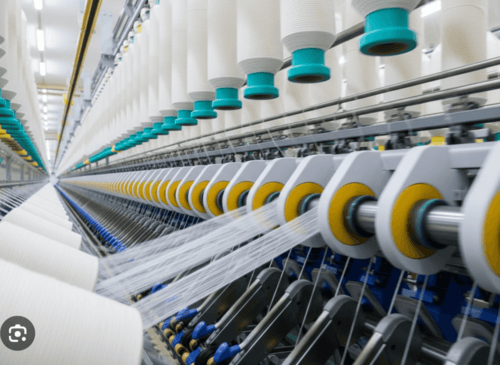
Boost spinning efficiency by mastering fiber physics. A technical guide on how Staple Length & Fineness impact drafting, yarn strength, and OEE.
The Physics of Spinning Performance
In any spinning operation, fiber characteristics define the machine’s performance limits. While mechanical settings matter, Spinning Efficiency is fundamentally dictated by the raw material.
Among all variables, Staple Length and Fineness (Micronaire) shape how smoothly fibers draft, how efficiently they bind, and how consistently yarn strength develops.
When these properties are balanced, mills experience high OEE (Overall Equipment Effectiveness) and stable quality. When they are ignored, no amount of roller setting adjustments will fix the resulting end-breaks.
Driver 1: Staple Length & Drafting Stability
Staple length determines the “Overlap Factor”—how many fibers share the tension load during drafting.
Longer fibers provide superior frictional grip. This allows for smoother movement through the break draft zone and reduces the “Drafting Wave” (uncontrolled floating fibers).
The Impact on Ring Spinning:
- Greater Cohesion: Longer overlap means less slippage.
- Lower End-Breaks: Higher spinning tension capability.
- Reduced Fly: Fewer short fibers escaping the drafting zone.
The SFC Threat: Mean length is not enough; you must watch Short Fiber Content (SFC). A spike in SFC by just 3–5% can cause a disproportionate collapse in spinning efficiency. Short fibers float uncontrolled in the drafting zone, creating thick/thin places and causing “crackers.”
Related Insight: Synthetics allow for precise length control. See how this compares to cotton in our analysis: How Manmade Fiber Growth Is Reshaping the Textile Value Chain
Driver 2: Fineness (Micronaire) & Yarn Strength
Fiber Fineness (measured in Micronaire for cotton or Denier for synthetics) determines the Spinning Limit.
It dictates how densely fibers pack inside the yarn core. Finer fibers create more surface contact points, which increases fiber-to-fiber friction. This friction is the primary source of yarn strength.
The “Number of Fibers” Rule: For stable ring spinning, you generally need 70–80 fibers in the yarn cross-section.
- Fine Fiber (Low Mic): Allows you to spin finer counts (e.g., 60s Ne) while maintaining fiber count.
- Coarse Fiber (High Mic): Limits you to coarser counts. If you force coarse fiber into fine yarn, the cross-section drops below 60 fibers, and the yarn breaks.
Balancing Length vs. Fineness
A Spinning Master cannot view these two variables in isolation. They interact dynamically to determine machine settings.
Impact Matrix: Fiber Properties vs. Machine Response
| Scenario | Impact on Drafting | Required Adjustment |
| Long & Fine | High friction, potential for “crackers” if tight. | Open the Roller Settings slightly; reduce Break Draft. |
| Short & Coarse | Low friction, high slippage (Drafting Waves). | Increase Twist Multiplier (TM); Apply higher top-arm pressure. |
| High SFC % | Uncontrolled floating fibers. | Use narrower Spacer size; Reduce Spindle Speed. |
Optimizing Machine Settings for Efficiency
High spinning efficiency is achieved when machine parameters are tuned to the specific fiber lot.
1. Roller Settings (Drafting Zone) Finer fibers allow for higher spindle speeds, but they are delicate.
- Adjustment: Reduce top arm pressure for ultra-fine fibers to prevent fiber rupture.
- Draft: Optimize the break draft to ensure fibers slide rather than snap.
2. Twist Multiplier (TM) Fine combed cotton often requires a lower Twist Multiplier than coarse cotton to achieve the same strength.
- Benefit: Lower twist means higher production speeds (KPI boost).
3. Traveller Selection Finer fibers pack tighter, creating a leaner yarn. This reduces the friction on the ring/traveller interface, allowing for lighter travellers and reduced heat generation.
Sustainability: The Hidden Benefit
Controlling fiber parameters isn’t just about productivity; it is a sustainability strategy.
High spinning efficiency means fewer end-breaks. Fewer breaks mean less Pneumafil Waste (Roving waste) and lower energy consumption per kilogram of yarn produced.
Related Strategy: Learn how efficiency correlates with carbon metrics in our guide: Reducing the Textile Carbon Footprint
Final Takeaway: Predictable Fibers, Predictable Profits
Staple length and fineness are the anchors of the spinning process. Mills that rigorously test incoming bales (using HVI or AFIS standards) and adjust their drafting zones accordingly will consistently outperform those that rely on “average” settings.
For verification of HVI testing protocols and grading standards, always refer to the official USDA Cotton Grading Guidelines.
For a holistic view of the production flow, return to the The Modern Textile Manufacturing Value Chain: From Fiber Science to Factory Profit
Reference Standards: ISO 3060 (Cotton Fibers — Determination of breaking tenacity).
One thought on “Spinning Efficiency: Staple Length & Fineness Guide”
Comments are closed.