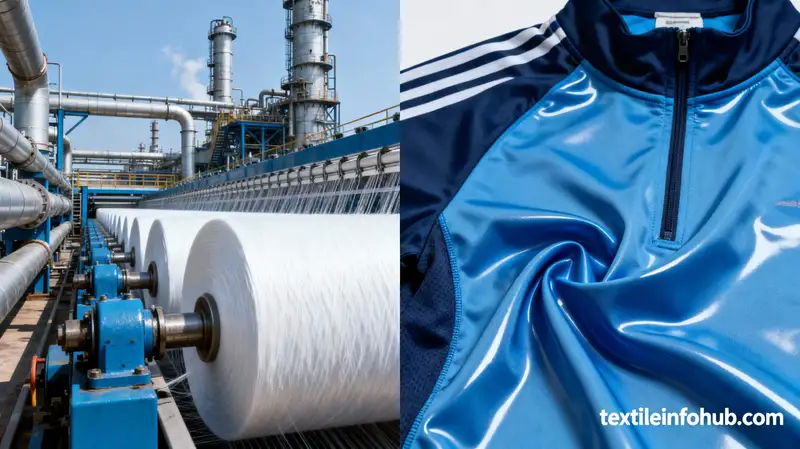

You’ve spent years mastering fibers, yarns, and wet processing. Now what? A practical, no-fluff guide to the real career paths, roles, and salary potential for textile engineers and B.Tech graduates.
Introduction: Your Degree is a “Passport,” Not a “Job Title”
Congratulations. You’ve just completed one of the most demanding and multi-disciplinary Textile Engineering Degree available. You’re part mechanical engineer, part chemist, part industrial designer, and part supply-chain analyst.
And now you’re asking the big question: “What’s next?”
As someone who’s been in this industry for over two decades, let me give you the single most important piece of advice: A textile engineering degree is not a job title; it’s a passport.
The textile industry is one of the largest in the world, and it’s not just one thing. It’s a massive chain of specialized businesses. The true value of your degree is that you are one of the few people who can speak the language of that entire chain.
This is not a generic career guide. This is a practical breakdown of the real, high-value career paths you can step into right now.
The Core Career Paths: Where Do You Fit?
Your career will likely start in one of these five core areas. I’ll explain what you actually do and what the growth path looks like.
1. The Production Manager (The “Floor General”)
This is the heart and soul of manufacturing. You don’t just sit at a desk; you run the factory floor.
- What you do: You are responsible for the KPIs (Key Performance Indicators) that keep a mill profitable: Production efficiency, Machine Utilization, RFT %, waste reduction and labor management. You are the #1 problem-solver on the floor.
- Starting Role: Production Trainee, Shift Supervisor.
- Where it leads: Spinning Manager, Weaving Manager and eventually Plant Head or General Manager (Operations). This is a direct path to running the entire company.
- Best for: People who are hands-on, are good leaders, and thrive under pressure.
2. The Wet Processing Expert / Dyeing-Finishing
This is the domain of chemistry, color, and high-stakes problem-solving. This is where the most value (and the most risk) is in the supply chain.
- What you do: You are a “Dyehouse Trainee” or “Lab Tech.” Your job is color matching, recipe formulation (dyes, auxiliaries), and troubleshooting. You are the person who has to answer “Why do we have shade variation on this fabric?” or “How do we hit this color standard?” Special Finish Recipe formulation. Technical Textile etc.
- Starting Role: Lab Dip Trainee, QC Officer, Dyehouse Supervisor.
- Where it leads: QC Manager, Dyehouse Manager, Technical Director.
- Best for: Those who loved their chemistry, dyeing, and finishing classes. This path requires a high degree of technical precision.
3. The Merchandiser (The “Business Hub”)
This is the “commercial” side of the industry. You are the bridge between the factory and the global brand (e.g., your customer, like H&M, Nike, or a B2B buyer).
- What you do: You manage the entire “critical path” of an order. You are responsible for costing (calculating the price of a garment), negotiating with the brand, sourcing materials, and coordinating with your own production team to ensure the order ships on time.
- Starting Role: Trainee Merchandiser, Sourcing Assistant.
- Where it leads: Senior Merchandiser, Sourcing Manager, Head of Merchandising.
- Best for: Excellent communicators, great negotiators, and highly organized people who love both the product and the business.
4. The R&D / Innovation Scientist (The “Future Shaper”)
This is where new technology is born. You work for major fiber manufacturers, chemical suppliers, or specialized R&D labs.
- What you do: You don’t just use materials; you invent them. You could be developing new sustainable fibers, creating a PFC-free water-repellent finish, or engineering a new product.
- Starting Role: R&D Lab Technician, Junior Scientist.
- Where it leads: Senior R&D Scientist, Innovation Manager, Head of R&D.
- Best for: Students with a passion for research, chemistry, and polymers. An M.Tech or Ph.D. is often a huge advantage here.
5. The Compliance & Sustainability Officer (The “Gatekeeper”)
This is one of the newest and fastest-growing career paths. No major brand will buy from a mill without a strong compliance team.
- What you do: You are the expert on the “alphabet soup” of global standards. Your job is to manage audits and ensure the factory is compliant with
Bluesign, Oeko-Tex, GOTS, ZDHC, and all environmental and social regulations. - Starting Role: Sustainability Assistant, ETP (Effluent Treatment Plant) Officer.
- Where it leads: Head of Sustainability, Global Compliance Manager.
- Best for: Those with a passion for the environment and a meticulous, detail-oriented mind.
The “Salary Question”: A Realistic Look
I will be direct with you: a textile engineering degree often does not have the same “Day One” starting salary as a computer science degree.
- The Model: The textile industry is a “get your hands dirty” field. The starting salaries are typically modest as you go through your initial trainee period.
- The Growth: The salary growth is what matters. Your “insider” technical knowledge is your leverage. A software engineer’s salary may plateau, but a good General Manager of a large mill or a Senior Sourcing Manager for a global brand earns an executive-level salary that is extremely competitive.
Here are some realistic, estimated salary ranges in India to give you a practical idea. (Note: These can vary significantly based on your company, your negotiation skills, and your location.)
Please Note : These figures represents current salary scenario of respective experience.
| Experience Level | Common Roles | Estimated Annual Range (LPA) |
| B.Tech Fresher (0-2 years) | Graduate Engineer Trainee (GET), Production Trainee, Lab Tech | ₹3.5 LPA – ₹6.5 LPA |
| Mid-Level (3-10 years) | Asst. Production Manager, Senior Merchandiser, QC Manager | ₹7 LPA – ₹14 LPA |
| Senior-Level (15+ years) | Head of Production, DGM, Senior Sourcing Manager | ₹18 LPA – ₹35 LPA+ |
| Executive-Level (20+ years) | Plant Head, General Manager, Director, VP | ₹40 LPA and well above |
The “Money” Roles:
Generally, the fastest path to a high salary is on the “commercial” side. Roles like Merchandising and Technical Sales (selling dyes, chemicals, or machinery) are often linked to performance bonuses and commissions, giving them a much higher earning potential than a purely technical, factory-floor role.
Advice from a Professional
- Get Your Hands Dirty: Don’t be afraid to spend your first 1-2 years on the production floor, even on the night shift. The person who has actually run a dyeing machine or a loom will always be more respected than the person who has only read the textbook.
- Become the Master of One Thing: Don’t try to be an expert in everything. Pick a path. Become the best spinning manager, the best colorist, or the best merchandiser. Deep expertise is what gets you promoted.
- Learn the Business: The technical experts who also understand why their decisions matter to the bottom line are the ones who become directors. Read our https://textileinfohub.com/calculate-landed-cost-textile-imports/
Guide to Calculating Landed Cost. Understand what an https://textileinfohub.com/how-to-choose-textile-erp/ERP systemdoes. This “business” knowledge is what separates a manager from an executive.
Recommended Books for Your Career
A degree gets you the job, but continuous learning gets you the promotion. Here are the three books every textile professional should own.
1. For Your Technical Foundation Book: Textiles by Sara J. Kadolph
Why it’s essential: This is the gold-standard modern textbook. You’ll keep it on your desk and refer to it for the rest of your career. It’s the best all-in-one technical reference you can own.
2. For Your Career Growth Book: The First 90 Days by Michael D. Watkins
Why it’s essential: Your first three months at your new job are the most critical. This book is the “manual” for how to make a great impression, learn the ropes, and secure an early win. It’s not a textile book; it’s a career-launching book.
3. For Your Business Mind Book: The Business of Fashion by Leslie Davis Burns
Why it’s essential: This book is crucial for “seeing the whole picture.” It connects the dots between manufacturing (your expertise) and the consumer-facing world of design, marketing, and retail. It will help you understand why your customers make the decisions they do.
Conclusion: The Future of Your Degree
Your textile degree is incredibly valuable. The industry is facing massive challenges in sustainability, technology, and supply-service chain speed. It needs smart, technically-minded graduates like you to solve them.
Whether you choose the factory floor, the R&D lab, or the commercial office, you have a passport to a global, essential, and endlessly fascinating industry.
To get a full, high-level overview of the entire manufacturing process you’re about to enter, your first stop should be our foundational pillar post: https://textileinfohub.com/ultimate-guide-textile-manufacturing The Ultimate Guide to Textile Manufacturing: From Fiber to Fabric