
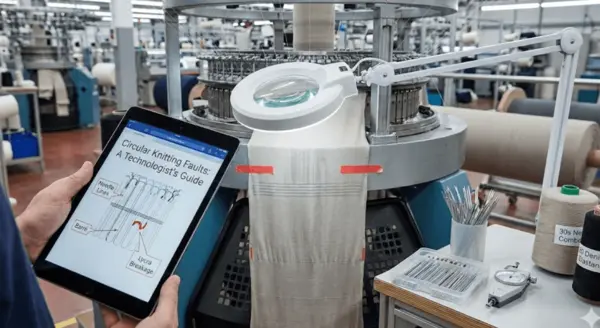
Close-up of circular knitting needle latch failure causing vertical fabric lines.

Circular Knitting: A Technologist’s Guide to Zero Fabric Faults & Remedies

Introduction: The High Cost of “Grade B” In the modern knitting mill, the difference between a profitable quarter and a financial loss often hangs by a single thread literally. For a standard circular knitting setup running 30s Ne (20 Tex) cotton at 25 RPM, the production volume is immense. However, volume is irrelevant if the…


Read More
ISO 9001:2015

ISO 9001:2015 – Certification Master Guide for Textile Wet Processing Mills

Most mill owners treat ISO 9001 as a marketing badge to satisfy a buyer’s compliance checklist. This is a missed opportunity. In a wet processing unit, you are managing chaos. You are juggling variable water parameters, fluctuating steam pressure (6-8 bar), and dosage inconsistency of chemicals and dyes If implemented correctly, ISO 9001 is not…

Read More
ISO 105 Color Fastness

ISO 105 Explained Completely: The Definitive Guide to Color Fastness Testing in Textiles

In textile processing, color fastness is not a laboratory ritual performed to satisfy buyers. It is a direct measure of how well chemistry, process control, and quality discipline have been executed on the shop floor. When garments bleed, fade, or stain other fabrics, the failure is rarely accidental. It is almost always predictable—and preventable. The…

Read More
fabric pilling

Mastering Fabric Pilling: ISO 12945 Testing Guide

Stop rejections due to fabric pilling. A technical guide to ISO 12945 testing methods, grading standards, and engineering pilling resistance from fiber to finish. The “Fuzz” That Kills Brand Reputation For a consumer, fabric pilling—those annoying small balls of fiber on a sweater—is a clear sign of cheap quality. For a manufacturer, it is a…

Read More