The functional textile finishing agents market is moving beyond conventional softness, appearance and easy-care performance. In 2026, mills and brands increasingly expect finishing chemistry to deliver measurable functions—antimicrobial performance, moisture management, water repellency, UV protection, flame resistance, thermal regulation and more—while also meeting stricter chemical-management and traceability requirements.
This is changing how finishing agents are developed, purchased and evaluated. Price per kilogram remains important, but successful selection now depends on durability, application cost, substrate compatibility, restricted-substance compliance and documented performance after repeated laundering.
Key Takeaways
- One market estimate values functional textile finishing chemicals at approximately USD 4.1 billion in 2026.
- Performance apparel, healthcare textiles, protective clothing, home textiles and automotive applications are important demand drivers.
- Repellent, antimicrobial, moisture-management and flame-retardant technologies remain major functional categories.
- Buyers are increasingly requesting PFAS-free, formaldehyde-conscious and resource-efficient alternatives.
- Product claims must be supported by recognized laboratory testing and wash-durability data.
- The winning chemistry is not necessarily the cheapest product—it is the formulation that delivers the required performance at the lowest total applied cost.
Functional Textile Finishing Agents Market Size
Grand View Research estimates that the global functional textile finishing chemicals market was worth about USD 3.3 billion in 2022 and could reach approximately USD 4.1 billion in 2026 and USD 5.0 billion by 2030. This represents an estimated compound annual growth rate of 5.3% between 2023 and 2030.
The same analysis identified Asia-Pacific as the largest regional market, representing 53.3% of revenue in 2022. Repellent and release products held the largest product share, while antimicrobial and anti-inflammatory products were expected to be among the faster-growing categories.
These values should be treated as estimates rather than audited industry totals because market definitions vary. Some reports count only functional finishing chemicals, while others include coating systems, binders, textile auxiliaries or chemicals used in technical textiles.
Source: Grand View Research—Functional Textile Finishing Chemicals Market
| Indicator | Market estimate |
|---|---|
| Global market size, 2022 | USD 3.3 billion |
| Estimated market size, 2026 | USD 4.1 billion |
| Forecast market size, 2030 | USD 5.0 billion |
| Estimated CAGR, 2023–2030 | 5.3% |
| Largest regional market in 2022 | Asia-Pacific |
| Leading product segment in 2022 | Repellent and release agents |
What Is a Functional Textile Finishing Agent?
A functional finishing agent is a chemical or material system applied to a fibre, yarn, fabric or garment to provide a measurable property that is not sufficiently present in the untreated textile.
Unlike conventional aesthetic finishes, which mainly change handle, lustre or appearance, functional finishes are selected to solve a defined performance problem.
Examples include:
- preventing bacterial growth or odour development;
- moving perspiration away from the skin;
- resisting water, oil or stains;
- reducing static charge;
- protecting against ultraviolet radiation;
- delaying flame spread;
- improving crease recovery;
- regulating heat;
- providing soil release or easy-clean performance.
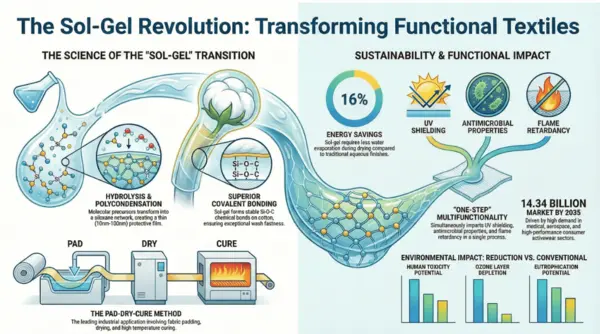
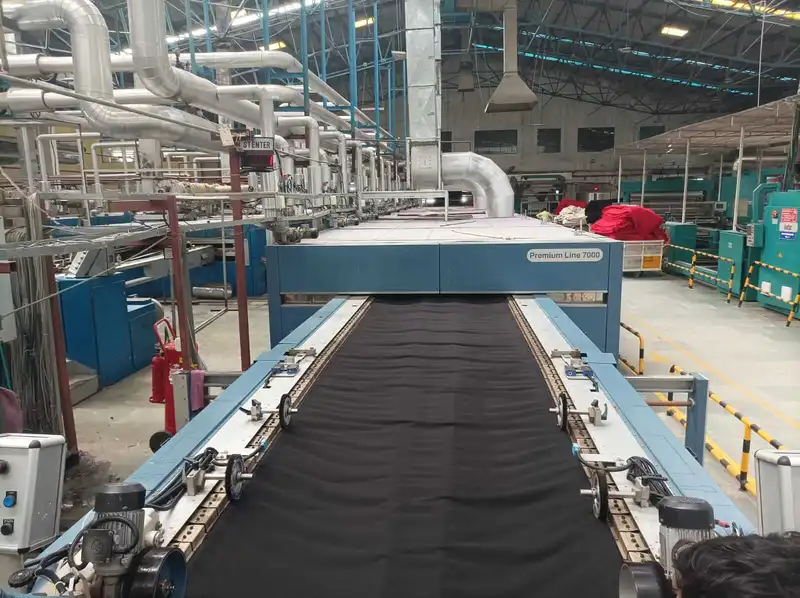
The finish may be applied by padding, exhaust, coating, spraying, foam application, printing, encapsulation, sol-gel processing or another surface-modification technique. The correct method depends on the substrate, chemistry, required add-on and production scale.
Major Types of Functional Textile Finishing Agents
| Finishing category | Primary function | Common applications | Critical selection issue |
| Antimicrobial and odour-control agents | Control microbial growth or odour | Sportswear, socks, medical textiles and bedding | Efficacy claims, skin safety and wash durability |
| Water- and stain-repellent agents | Reduce wetting and staining | Outdoor wear, upholstery, workwear and uniforms | PFAS status, breathability and durability |
| Moisture-management agents | Improve wetting, wicking and drying | Activewear, polyester knits and next-to-skin apparel | Compatibility with softeners and retention after washing |
| Flame-retardant agents | Reduce ignition or flame propagation | Protective clothing, furnishings and transport textiles | Fibre type, statutory test method and durability |
| UV-protective agents | Reduce transmission of ultraviolet radiation | Outdoor apparel, sportswear, awnings and children’s wear | UPF performance after stretching and laundering |
| Antistatic agents | Reduce accumulation of static charge | Synthetic textiles, cleanroom garments and industrial fabrics | Humidity dependence and durability |
| Easy-care and wrinkle-resistant agents | Improve crease recovery and dimensional appearance | Shirts, uniforms, bed linen and cellulosic fabrics | Formaldehyde release, strength loss and handle |
| Thermoregulating systems | Absorb, store or release heat | Performance apparel, bedding and protective textiles | Encapsulation stability and repeated-cycle performance |
| Soil-release agents | Improve removal of oily or particulate soil | Workwear, hospitality textiles and polyester blends | Balance between soil release and repellency |
| Conductive and smart-textile coatings | Enable sensing, heating or electrical conductivity | Wearables, medical monitoring and heated textiles | Flexibility, conductivity retention and washability |
What Is Driving Market Growth in 2026?
1. Demand for Higher-Value Performance Textiles
Textile producers face intense price competition in commodity fabrics. Functional finishing provides a route to differentiation because it allows a mill to sell measurable performance rather than fabric weight and construction alone.
A standard polyester knit can become a moisture-management sports fabric. A cotton workwear fabric can gain flame-resistant or easy-care properties. Upholstery can be upgraded with stain resistance, antimicrobial performance or improved durability.
This value addition is particularly important for mills trying to move from commodity orders into sportswear, healthcare, protective apparel, automotive or technical-textile programs.
2. Growth in Technical Textiles
Functional chemicals are essential to many technical textiles because the required performance cannot be achieved through fibre and construction alone.
A separate 2026 market estimate places the broader technical-textile chemicals market at approximately USD 10.4 billion, with Asia-Pacific maintaining a leading regional position. Although this category is wider than finishing agents, it demonstrates how technical applications are supporting demand for specialized textile chemistry.
Source: Grand View Research—Technical Textile Chemicals Market
3. Chemical Compliance Is Becoming a Buying Requirement
Brands increasingly require chemical suppliers and textile facilities to demonstrate conformity with manufacturing restricted-substance lists rather than relying only on finished-product testing.
The ZDHC Manufacturing Restricted Substances List covers chemical formulations used in textile processing, including coatings and finishing agents. It targets substances that should not be intentionally used during manufacturing.
Similarly, OEKO-TEX ECO PASSPORT evaluates textile chemicals, colourants and auxiliaries against chemical-safety and environmental criteria. For buyers, recognized documentation can reduce the risk associated with unknown formulations and unsupported compliance declarations.
4. Transition Away from Problematic Chemistry
Water-, oil- and stain-repellent performance has traditionally relied heavily on fluorinated chemistry. The proposed EU-wide restriction on PFAS remains under evaluation, including its implications for textiles, upholstery, leather, apparel and carpets.
This does not mean every PFAS application is already prohibited under one universal rule. It does mean that mills and chemical suppliers should prepare for stronger regulatory and buyer pressure, especially where a fluorine-free alternative can meet the required performance.
Source: European Chemicals Agency—PFAS restriction process
5. Traceability and the Digital Product Passport
The EU Ecodesign for Sustainable Products Regulation establishes a framework for product-specific ecodesign requirements and Digital Product Passports. Product-level requirements will depend on future delegated acts, but the direction is clear: data concerning materials, chemicals, performance and environmental characteristics will become increasingly important.
For textile finishers, this creates a practical need to maintain accurate chemical inventories, batch records, test reports and supplier declarations.
Source: Regulation (EU) 2024/1781—Ecodesign for Sustainable Products
US Functional Textile Finishing Agents Market
The United States market is strongly influenced by performance apparel, healthcare products, protective clothing, automotive textiles, home furnishings and smart-textile development.
US buyers typically expect suppliers to provide more than a product data sheet. Depending on the application, a mill may need to demonstrate:
- performance against an appropriate AATCC, ASTM, ISO or industry-specific test;
- effectiveness after a specified number of wash or cleaning cycles;
- compliance with the buyer’s restricted-substance requirements;
- toxicological and safety documentation;
- consistency across production lots;
- evidence supporting any antimicrobial, protective or environmental claim.
The practical opportunity for suppliers is therefore not simply selling more chemical. It is supplying a complete performance package: chemistry, application guidance, testing support, compliance documents and troubleshooting.
Natural Versus Synthetic Textile Substrates
A functional agent rarely performs identically on every fibre.
Cotton and Other Cellulosics
Cotton is hydrophilic and chemically reactive, making it suitable for many easy-care, antimicrobial, flame-retardant and moisture-management treatments. However, some crosslinking systems can reduce tensile or tear strength and negatively affect handle.
Polyester
Polyester is naturally hydrophobic. Moisture-management finishing commonly aims to increase surface wettability and improve capillary movement without permanently sacrificing drying performance. Thermal migration, high-temperature curing and incompatibility with silicone softeners require careful evaluation.
Nylon
Nylon can provide useful moisture interaction but may be sensitive to pH, heat and staining. Finishing formulations must be evaluated for shade change and fabric yellowing.
Blends
Cotton-polyester and other blends are commercially important but technically challenging because each fibre responds differently. A system optimized for cotton may not anchor effectively to polyester, while a synthetic-fibre finish may impair cotton absorbency.
For blends, laboratory development should measure performance on the actual production fabric—not on a generic fibre swatch.
Sustainable Technologies Reshaping Functional Finishing
A 2026 review covering 172 references identified several directions for more sustainable textile functionalization, including bio-based materials, green-synthesized nanomaterials, enzymatic treatments, sol-gel processing, encapsulation and layer-by-layer assembly.
Source: Sustainable Materials and Methods for Functional Finishing of Textiles
Promising approaches include:
Bio-Based Functional Materials
Natural organic acids, chitosan, plant extracts and materials derived from agricultural residues are being studied for antimicrobial, UV-protective and other functions. Their commercial success will depend on reproducibility, colour impact, odour, durability and scalable sourcing.
Plasma Treatment
Plasma can modify the textile surface with limited water and chemical consumption. It may improve adhesion, wettability or readiness for subsequent coating. Capital cost, treatment uniformity and production speed remain important considerations.
Sol-Gel Finishing
Sol-gel systems can create thin inorganic or hybrid networks on the fibre surface. They are used in research and commercial development for flame resistance, UV protection, antimicrobial properties and self-cleaning effects.
Microencapsulation
Encapsulation protects an active material and controls its release. Applications include fragrance, phase-change materials, insect repellents and skin-care ingredients. The main challenges are capsule durability, handle and release consistency.
Low-Add-On and Digital Application
Foam, spray and digitally controlled application technologies can place chemistry more precisely and reduce bath volume, drying load and waste. The commercial value comes from lowering total resource consumption—not merely using a chemical marketed as “green.”
How Mills Should Select a Finishing Agent
Step 1: Define the Claim
Do not begin with a product name. Begin with a measurable requirement.
For example:
- water-repellency rating after 20 washes;
- wicking height after a defined time;
- antimicrobial reduction under a specified method;
- UPF value after laundering and stretching;
- flame-spread requirement for the intended end use.
A vague request such as “make it antimicrobial” creates room for expensive misunderstandings.
Step 2: Confirm Substrate Compatibility
Provide the supplier with the exact fibre blend, fabric construction, GSM, pretreatment history, dye class, shade and existing finishes.
Step 3: Evaluate the Full Recipe
Functional products interact with softeners, resins, catalysts, wetting agents, optical brighteners and other auxiliaries. Test the complete recipe, not each chemical in isolation.
Step 4: Measure Durability
Initial performance is only the starting point. Testing should reflect the expected number of domestic washes, industrial laundering cycles, dry-cleaning cycles or weathering exposure.
Step 5: Check Chemical Documentation
Request an up-to-date safety data sheet, technical data sheet, restricted-substance declaration and relevant third-party certification or conformance documentation.
Step 6: Calculate Total Applied Cost
The lowest product price does not always produce the lowest finishing cost. Compare:
- required concentration;
- wet pick-up or add-on;
- curing temperature and time;
- energy and water consumption;
- reprocessing risk;
- effect on shade and handle;
- durability achieved;
- wastewater-treatment implications.
Step 7: Run a Controlled Production Trial
A laboratory pad-batch or exhaust trial cannot reproduce every production variable. Conduct a monitored bulk trial and record bath stability, pickup, width, overfeed, drying, curing, shade, handle and final test results.
Key Challenges for the Market
Performance Versus Sustainability
A bio-based or fluorine-free product is not automatically more sustainable if it requires a higher add-on, fails prematurely or causes repeated reprocessing. Environmental improvement must be evaluated alongside durability and resource consumption.
Durability Versus Handle
Higher add-on and stronger crosslinking may improve wash durability but can make fabric harsh, reduce absorbency or impair breathability.
Multiple Finishes on One Fabric
Modern products may require softness, wicking, antimicrobial protection and UV performance simultaneously. Combining these functions can create incompatibility, bath instability or competition for the fibre surface.
Unsupported Marketing Claims
Terms such as “eco-friendly,” “non-toxic,” “antibacterial” and “permanent” require evidence. Mills should avoid publishing claims that exceed the scope of their testing or certification.
Cost Pressure
Brands request stronger performance and compliance but do not always accept a proportional price increase. Chemical suppliers therefore compete on concentration efficiency, lower-temperature curing, multifunctionality and reduced process cost.
Outlook for 2026–2030
The functional textile finishing agents market is expected to grow steadily rather than simply expand through higher chemical consumption. The more important change is the shift toward higher-value, more efficient and better-documented chemistry.
The strongest opportunities are likely to be:
- durable fluorine-free repellency;
- odour-control and antimicrobial technologies with defensible claims;
- moisture-management systems for synthetic and blended fabrics;
- multifunctional finishes that reduce processing stages;
- bio-based and lower-impact formulations;
- low-add-on application systems;
- finishing packages designed for technical textiles;
- chemistry supported by digital traceability and third-party documentation.
For mills, the strategic advantage will come from connecting chemical selection with process engineering, testing and compliance. Suppliers that only sell drums will face price competition. Suppliers that deliver verified performance, application support and traceable documentation will be positioned as development partners.
Frequently Asked Questions
How large is the functional textile finishing agents market in 2026?
One current estimate places the global functional textile finishing chemicals market at approximately USD 4.1 billion in 2026. Market estimates vary according to which chemicals and applications are included.
What are functional textile finishing chemicals?
They are chemical or material systems applied to textiles to create measurable properties such as antimicrobial activity, moisture management, water repellency, flame resistance, UV protection, antistatic performance or thermal regulation.
Which functional finishing agents are in highest demand?
Demand is strong for repellent, antimicrobial, moisture-management, flame-retardant, soil-release and easy-care technologies. The fastest-growing category can vary by region and end-use market.
Why is Asia-Pacific important to this market?
Asia-Pacific contains many of the world’s major textile-production centres, including China, India, Bangladesh and Vietnam. Its large wet-processing and garment-manufacturing base drives demand for finishing chemicals and technical support.
What is driving the US functional textile finishing agents market?
Important drivers include performance apparel, healthcare textiles, protective clothing, home furnishings, automotive textiles and smart-textile development.
Are PFAS-based textile finishes banned?
There is no single universal global ban covering every PFAS textile use. However, restrictions already apply to certain substances and jurisdictions, while the EU is evaluating a broader PFAS restriction proposal. Buyer demand for fluorine-free alternatives is increasing.
How can a mill compare two finishing agents?
Compare them using the same production fabric, application method and test conditions. Evaluate total applied cost, initial performance, wash durability, handle, shade change, resource consumption and compliance documentation—not product price alone.
Summary / Conclusion
Functional finishing is becoming one of the textile industry’s most important value-creation stages. The market is being shaped by demand for measurable performance, technical-textile growth, chemical restrictions, resource efficiency and traceability.
For manufacturers, the winning strategy is clear: define the required claim, select chemistry for the actual substrate, verify durability, calculate total applied cost and retain evidence for every performance and sustainability statement.
A finish should not merely add a feature to fabric. It should create reliable, testable and commercially valuable performance.