
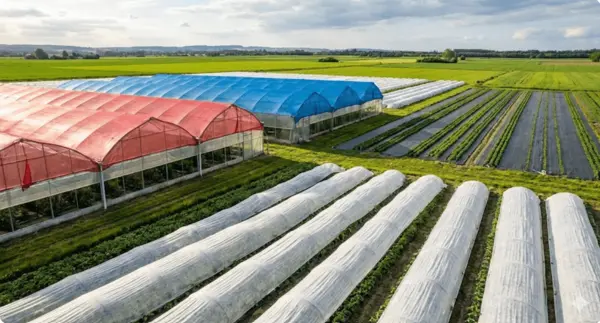
Introduction: The Shift to Protected Cultivation
Global agriculture is undergoing a critical transition from traditional open-field farming to precision-based “Protected Cultivation.” At the heart of this shift lies Agrotech technical textiles, a segment engineered to secure food production against climate volatility. For textile manufacturers, this represents a pivot from aesthetic apparel to high-performance functional fabrics.
The core function of Agrotech is not merely covering crops, but actively managing environmental variables like light transmission, humidity, and temperature. By utilizing UV-stabilized polymers and specific mesh densities (typically 40-50 GSM), these textiles can increase crop yields by 30-50% compared to conventional farming. This direct correlation between product performance and agricultural ROI makes Agrotech a recession-resilient investment.
Key Agrotech Products & Functional Classifications
To capitalize on this yield potential, manufacturers must distinguish between the specific product classes engineered for distinct environmental threats. The market is segmented not by aesthetics, but by the specific “stress factor” the textile alleviates—be it excess sun, pests, or water scarcity.
1. Shade Nets & Screens:
These are the dominant category, typically manufactured from High-Density Polyethylene (HDPE) tapes using Raschel knitting machines. These nets offer customizable shade factors ranging from 35% to 90%, allowing farmers to control Photosynthetic Active Radiation (PAR) precisely. Standard weights range from 80 GSM to 350 GSM depending on the required durability and wind resistance.
2. Ground Covers (Mulch Mats):
Serving as the foundation for soil health, these textiles suppress weed growth and reduce water evaporation by up to 40%. They are predominantly woven Polypropylene (PP) fabrics, engineered with high UV stabilization to withstand prolonged ground exposure.
3. Crop Covers (Nonwovens):
Often produced using Spunbond Polypropylene (17-30 GSM), these lightweight covers provide critical thermal insulation against frost while remaining permeable to air and water.
| Product Category | Primary Function | Typical Technical Spec |
| Agro-Shade Nets | Light & Temp Regulation | 35-90% Shade, Raschel Knit |
| Ground Covers | Weed Control & Water Mgmt | 100-130 GSM, Woven PP |
| Anti-Hail Nets | Impact Protection | 50-70 GSM, Leno Weave |
| Insect Nets | Pest Exclusion | 40-50 Mesh, Monofilament |
The Scope of Agrotech in Modern Agriculture
The market scope is defined by a critical global constraint: the inverse relationship between shrinking arable land and rising food demand. Farmers are forced to pivot to “intensive” cultivation, using technical textiles to create controlled micro-climates that guarantee higher yields per acre.
Furthermore, climate volatility has transformed these products from optional tools into mandatory risk mitigation assets. With the ability to secure 100% of a harvest against hail and reduce water usage by 40%, Agrotech is now essential infrastructure for bankable agricultural projects.
Investment Opportunities & Commercial Viability
Building on this mandatory demand, the most immediate investment opportunity lies in “Import Substitution” for high-performance screens. While generic green nets are commoditized, specialized photo-selective screens (e.g., Red or Aluminized nets) command premium margins and are currently under-supplied in domestic markets.
Investors should target the following high-growth segments:
- Horticulture Export Zones: Farms growing export-grade crops (e.g., Blueberries, Orchids) require specific 50-70% shade factors to meet quality standards.
- Aquaculture & Marine: The “Blue Revolution” is driving demand for heavy-duty anti-bird nets and cage nets, often requiring high-tenacity polymers.
- Climate-Smart Upgrades: There is a rising retrofit market for replacing old covers with UV-stabilized fabrics guaranteed for 5-7 years.
- Vertical Farming: Urban agriculture demands lightweight, flame-retardant nonwovens for indoor hydroponic systems.
Conclusion: The Future of Farming is Fiber-Based
The integration of Agrotech represents the final industrialization of agriculture, turning unpredictable weather into a manageable variable. For the textile industry, this sector offers a rare convergence of high-volume consumption and technical value addition. (For a broader analysis of high-performance materials, see our comprehensive guide to technical textiles
Mills that successfully pivot to these performance materials will not only secure a diversified revenue stream but will become pivotal partners in global food security. The strategic importance of this sector will be a central theme at upcoming global forums like Techtextil 2026 (Frankfurt) and GreenTech Amsterdam 2026, where the fusion of fiber and farming takes center stage. The future belongs to those who can weave durability into the very fabric of the farm.